Blog

A scary update

Hello, Sorcerers and Vampires!

This update will have some spooky information, but first, we were reminded that we hadn’t shown off any of the pictures we took of the Prime War demos at Gen Con! (Thanks Patrick!)
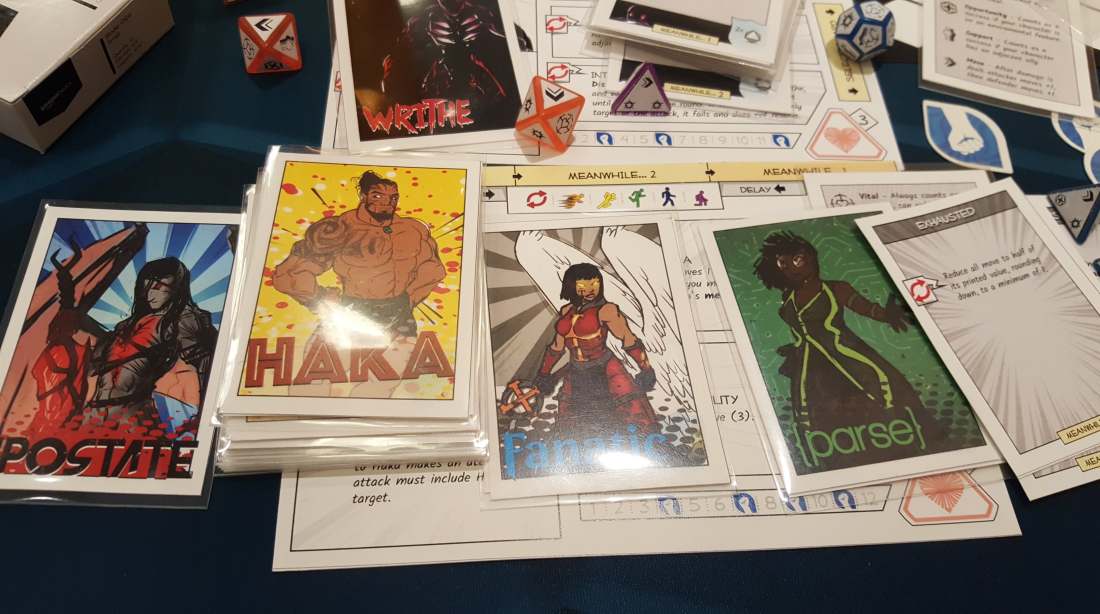
Several Character cards
Some Trophy cards and boards (All art and layout subject to change)
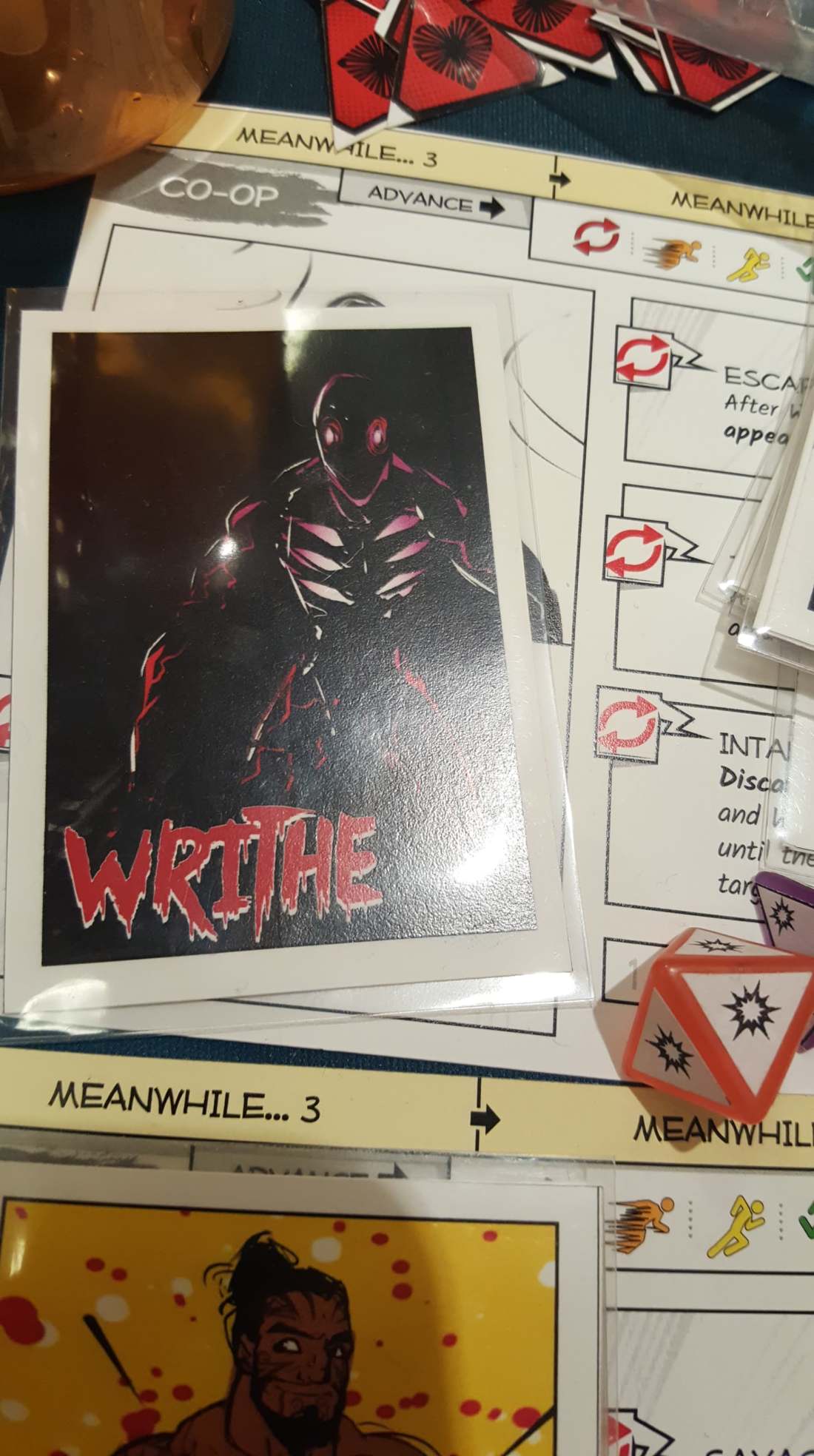
Writhe
Writhe! so spooky. (All art and layout subject to change)
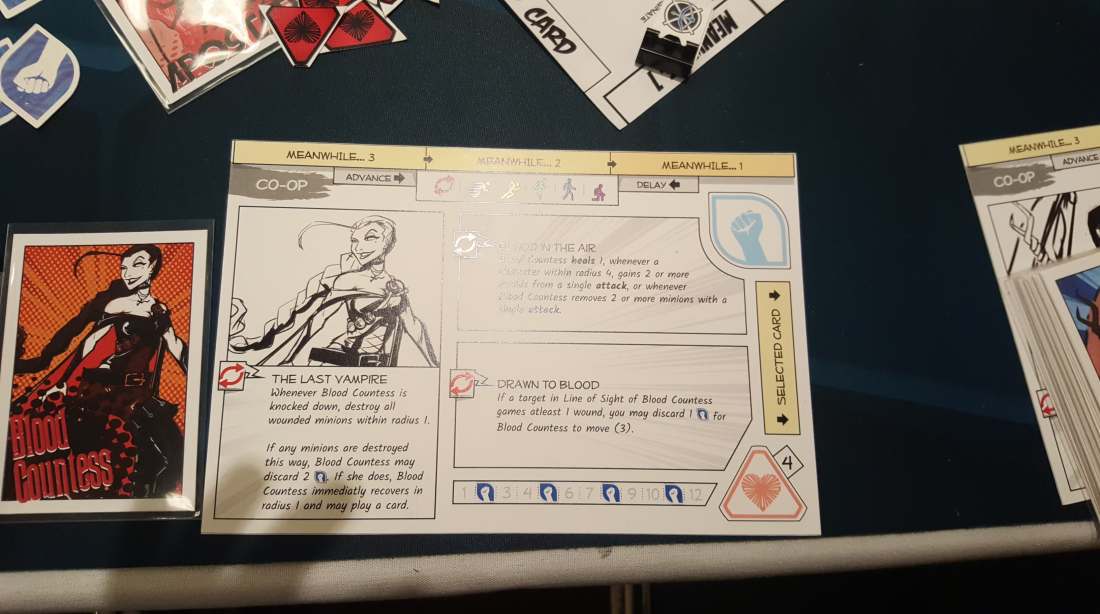
Blood Countess Upside Down
Blood Countess Board and Trophy card (All art and layout subject to change)
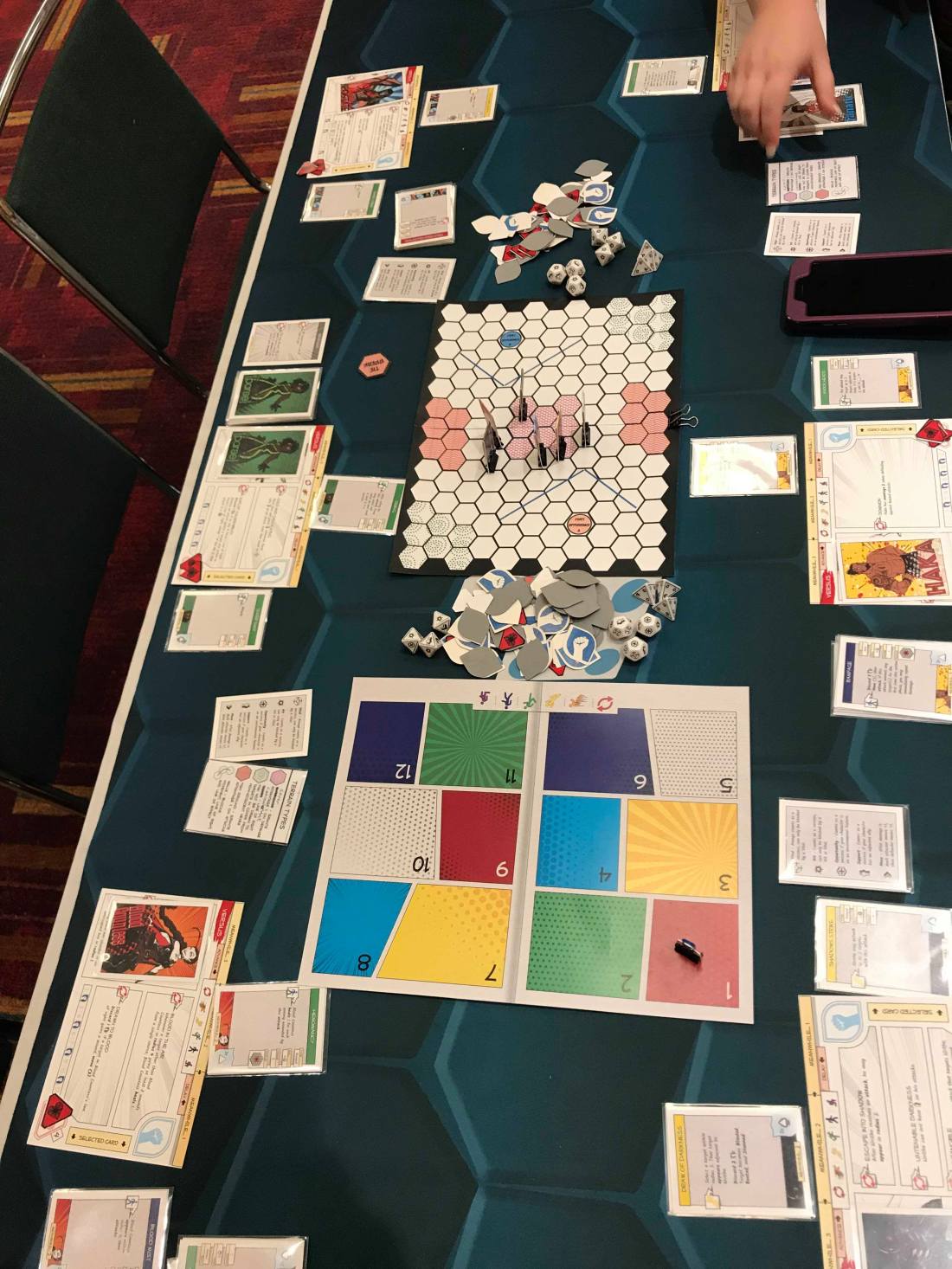
PvP full Table
Versus mode Teaching Round setup (All art, component design, and layout subject to change)

It’s been almost two months, but the ghost of Gen Con content still lingers, oooOoOOooh.

Now that you’ve gotten to see what was shown off at Gen Con, let’s talk a little about how the development process works for Prime War. For the first few months of design, we created the core system, characters, and scenarios in-house in our VA Beach headquarters. We then brought all of that content to >G in St. Louis, where they refined some of the system, most of the characters, and a little of each scenario arc. That was the true beginning of the current development cycle of Prime War. What generally happens now is that we design a new thing (or iterate a bit on an existing environment/scenario), and we write on some cards so we can play it really fast to make sure it works in practice as well as it seems in our heads. We’ll then plop it into our Google Sheets -> InDesign -> TTS/PnP prototyping pipeline, and send it off to >G staff and the >G playtesters, generally on a weekly/bi-weekly basis. We’ll ask the playtesters to try things out and give us some feedback within a week or so, a turnaround about which they’ve been pretty good. We’ll then take that feedback and iterate on that thing while giving the material we were working on during the previous cycle, and on it goes!

Every month or so, >G will have a flurry of in-house testing of a particular scenario, an environment, or a new way of wording a particular rule or set of rules which they then communicate to us; generally, they include the reason for their concern, what feedback they got from their staff, and what changes they made to accommodate the concerns, be they due to production costs, marketing, graphic design and layout, story, mechanics, or rules interpretations. We’ve been pretty understanding of the majority of the changes, and asked for clarifying information when we’re unclear as to the issue or the proposed solution, and occasionally stood our ground when a change would have contradicted the goals or the core of the game. (We’re sometimes told very gently that the game needs to morph in order to be a product, and we pout like babies and give a big dramaticĀ ugh, fiiiine, I guess… when this happens [= then we all agree as to what will make the game the best it can be)

We have visited St. Louis every 7-8 months or so since development started to have a time when both teams can focus on Prime War (we take vacation time from day jobs, and >G staff takeĀ most of the week) and address concerns, clarify design objectives, and discuss next steps. We also check in at Gen Con and PAX Unplugged to make sure we’re still in line to meet any goals. >G has a lot of oversight over Prime War, and sees every piece of content we produce, as well as all feedback from playtesters. The only true bottleneck in the process is having the time from Christopher and Adam to clarify lore points, but those are mostly ancillary to the actual development work, changing minor plot for scenarios or environments at this point, as most of the characters are solid mechanically and thematically.

Some of you have asked about videos or streams of previews, and we’d love to do some! I think >G has some plans to do character previews (as they’ve started doing for Spirit Island Spirits), so we will coordinate with them to make sure we’re not doubling anyone’s workload. Our game room doesn’t have nearly the quality of equipment that >G has, but we could potentially do some live play videos of some gameplay, and/or some commentated recordings of play, either through Tabletop Simulator or our physical components.

Similarly, we’d love to start putting up some posts about the characters, and potentially the environments. These would all need to be taken with anĀ enormous grain of salt, as nothing is truly canon until posted, published, or podcasted by >G themselves; however, we could definitely talk about where each concept started and how they grew, both mechanically and thematically, into whatever the current iteration is. As the bulk of development from now on is going to be scenarios, and we’d like most of that to be a surprise when you open the mission packs, we probably won’t talk about any scenario design until after the game’s release.

We understand there’s some concern regarding >G’s workload and process as it could impact Prime War after a recent Legends of Sleepy Hollow update, and we want to let everyone know we’re unlikely to see any additional delays with these announcements. We have every faith that >G will buckle down and get both Legends of Sleepy Hollow and the Sentinel Comics Role-Playing Game up to standards and out the door (in that order) as soon as possible, and that Prime War will be tight on their heels with the same level of care and attention.

–Smith at the Forge

Development Progress:(all values are rough estimates from our perspective as designers, and do not include any art, layout, editing, or proofreading work still necessary) Sorry we forgot this in the last post!

Core Box:
Characters 95%
Versus Scenarios (3Ɨ3) 20%
Co-op Scenarios (3Ɨ3) 60%
System (rules, dice, maps, environments) 95%
Co-op system(rules, threat/boss structure) 95%
Component list: 65%
Rule Book 60% (Phrasing, order of teaching, examples)
Expansion 1:
Characters 95%
Versus Scenarios (2Ɨ3) 20%
Co-op Scenarios (3+3+5) 55%
Conversion Kit:
Characters (9 FoF + 6 UR) 90%
Scenario Maps 30%

Post-Gen Con Update

Three weeks later…

Hello everyone!

This year’s Gen con was an absolute blast, not the least of which was seeing people show up to our (almost sold out) ticketed events! Many thanks to all of you who came out to play Prime War and give feedback, your input was greatly appreciated, even if it was as simple as “That was fun!”.

After demoing Versus and Cooperative modes for roughly 80 people, we got a lot of feedback about how people felt about the system, the characters, and the game modes. The few people who got to play both modes over the weekend mentioned that cooperative play was noticeably more complex and felt a lot slower than the Versus play. While we were there, we made some tweaks between demos to attempt to streamline and speed up cooperative play, and we took notes about what players were enjoying and what was a headache so we could take that information home for reworks.
We’ve been working on new Cooperative material for the last few weeks, focused on drawing Cooperative play more in line with Versus play by reducing the additional rules overhead, removing half of the target selection calculation process when minions act, reducing the number of targets on the map at one time, and focusing more on heftier, character-level targets as threats to oppose the players. We played through a few games with the new Threats and had a ton of fun; the new format was running matches about 45 minutes for us, which was a significant decrease from the 1.5 – 2 hour matches we were previously playing. Some characters felt wimpy or outright useless in the previous version of cooperative play, but by shifting the focus from hordes of minions to small teams of character-level threats, we’ve brought everyone back to where they were designed to be: key players in high-stakes superhuman tactical combat.

We’re really excited about these modifications and we’ve given the new materials to the playtesters, so we’ll be evaluating their feedback over the next few weeks as we update the scenario materials for the cooperative missions. Very little of the narrative or objectives will need to change with this new update, so we will be moving pretty quickly as playtesters give us feedback. If you would like to playtest Prime War, be on the lookout for announcements coming from Greater Than Games asking for new testers. It’s not for everyone, as it involves playing a lot of material that is broken, unfinished, and lacking polish; however, all feedback is invaluable to us, as it helps make the game better.

We once again thank you all for your patience with this process, especially as it may seem to be dragging lately. We’re invested in making both modes of play into a fun experience for everyone who is interested, and that involves a lot of fine-tuning and revisions to make sure it’s as good as can be. We’ve been hesitant to mention anything about a timeline here, as that’sĀ much more in Greater Than Games’ wheelhouse, and they have considerably more experience than we do in this arena. Lore Forge Games wants to make sure that we haveĀ everything done mechanically and thematically before we make any announcements regarding dates, and we’re just not there yet. The Cooperative play looks like its in a fairly good place with this latest update, and we’re hoping that playtesters are willing and able to jump in with both feet to help us push this down the track.

Until next time,

–Smith at the Forge

New Co-op and Gen Con Hype!

Welcome back, all you dashing and/or dastardly!

We mentioned in our last update that we settled on a new system for co-operative play, and (fingers crossed) we can say this is the one that will be in the box. There’s still a few minor things to work out in terms of edge cases, and we have to re-balance all of the scenarios we had in the pipeline as well as find a fun “cobble-together-your-own-game” mode for those of you who just want to throw down at the end of a day, but it’s coming along nicely. We also fleshed out a structure of content generation that will hopefully get more eyes on more of the scenarios so that each pre-packaged scenario is rich to experience and actually fun to play.

Something even more exciting, though: YOU, yes, you, can come see/touch/play both modes of Prime War forĀ 2 whole hours on Thursday, Friday, or Saturday at Gen Con! At the time of this writing, there are still several slots open on Thursday, and one on Friday, with both of our Versus and Co-operative demos on Saturday already full up! However, for those of you who were not able to get in on the scheduled demos this year, please feel free to come drop by the demo room (Room 140) and say hello, and we’ll try to give you an overview of what the game is all about.

Smith at the Forge

Development Progress:(all values are rough estimates from our perspective as designers, and do not include any art, layout, editing, or proofreading work still necessary)

Core Box:
Characters 95%
Versus Scenarios (3Ɨ3) 20%
Co-op Scenarios (3Ɨ3) 50%
System (rules, dice, maps, environments) 90%
Co-op system(rules, threat/boss structure) 85%
Expansion 1:
Characters 95%
Versus Scenarios (2Ɨ3) 20%
Co-op Scenarios (3+3+5) 45%
Conversion Kit:
Characters (9 FoF + 6 UR) 90%
Scenario Maps 30%

Pride, Publishers, and Playtesting

Hey all,

We are terribly sorry for our lack of updates over the last few months. We’ve been caught up with day jobs and preparing materials on our end to get everything ready for the demos at Gen Con.

We recently came back from a week of meetings with Greater Than Games to help clarify and resolve some of the more ambiguous pieces of the support mechanic and the co-operative mode to make sure that new players have as few barriers to play as possible. We’ve been working on this system for a little over two years now, and we were skeptical that changes were needed, as we had been very comfortable with the system for the last several months. However, a good developer brings things to a designer that are problematic, and a good publisher has an eye out for what may turn new players off. In >G, we are incredibly lucky to have both, as well as an uncompromising desire for this game to be the best that it can be. There were some hard discussions about complexity and demographic reach that helped us to realize that Prime War needed to be more than just a fun game for us, and therefore needed to evolve in a couple of areas in order to really blossom.

All that to say: Co-operative play is getting one more facelift; and after this week, we’re glad that >G pushed for another iteration, because we may have very well been complacent and content with the previous version. The new structure is more fully integrated with the activation phases that characters use, simplifies minion math and management, and is a little more intuitive for new players. We’re still putting it through its paces in order to fully evaluate its capability and to iron out any new snags that may have cropped up in the modifications, and after that, we’ll get to updating the existing scenarios to work with the new system. It’s been a long and contentious journey to this version of co-op play, but initial feedback from >G playtests have been incredibly promising.

We want to be very clear to anyone who has some anxiety about what may sound like us bending over backward for the Co-operative mode: nothing is being sacrificed from Versus play in order to make Co-op better. This will always be an excellent team vs. team game for those of you who want to match wits and cunning against your foes at the other end of the table. The simple truth has always been (and continues to be) that co-operative play is an incredibly frustrating thing to getĀ just right, and therefore needs a little more attention paid to its inner workings. The core rules that govern rounds, combat, movement, Meanwhile, and terrain are all super solid and create a really fun playground to try different team compositions, strategies, and combos for new and veteran players alike!

We also got to discuss some neat options for possible content to go in the box, but we’ve been told that isĀ heavily dependent on the quotes that are received from the manufacturer. Learning things about the board game industry is always fun and weird… This is also one of the reasons we’ve been hesitant to talk about any of the specific scenario content, as we’re incredibly unsure about what will all make it into the final boxes, at least for the next couple of months.

Once again, our sincerest apologies for the radio silence. We know you are all just as eager to hear about Prime War as we are to tell you about it, and we’re sorry we haven’t been able to keep you as up to date as either of us would like. We’re hopeful that at Gen Con we’ll be able to show off some fancy assets, and by the end of the year you’ll be able to see some neato promotional material that we had some fun talks about this week!

Smith at the Forge

Development Progress:(all values are rough estimates from our perspective as designers, and do not include any art, layout, editing, or proofreading work still necessary)

Core Box:
Characters 95%
Versus Scenarios (3Ɨ3) 20%
Co-op Scenarios (3Ɨ3) 50% (restructuring of co-op system re-set some progress here)
System (rules, dice, maps, environments) 85%
Co-op system(rules, threat/boss structure) 85%
Expansion 1:
Characters 95%
Versus Scenarios (2Ɨ3) 20%
Co-op Scenarios (3+3+5) 45% (restructuring of co-op system re-set some progress here)
Conversion Kit:
Characters (9 FoF + 6 UR) 90%
Scenario Maps 30%

Tantalizing Tidbits

Hello sidekicks and minions, today we’re going to try to stoke your interest and quench your curiosity.

The tale of Prime War is a bit outside the normal stories of Sentinel Comics, due to the fact that the story doesn’tĀ truly focus on the characters we’ve come to know, heroes or villains though they may be. Prime War is much more so the story of the Prime Aspects and their conflict over that no-land’s land, that place where nothing matters and everything is possible: Ur-Space. The Prime Aspects are vying for control in this place because of its unique position in the multiverse; namely, that from here one can go anywhere, given enough power. The story told within the PvP missions of Prime War games and tournaments is that of the conflict between the Aspects through their chosen standard bearers. Players will take the reins of a character in service to their aspect, and show dominance through objective-based combat in order to advance their faction’s cause. The co-op missions, on the other hand, tell the story of the various adversaries that threaten multiple realities, and how the Aspects send their adherents to shut down these existential dangers. These might be a power-mad Cult of Gloom trying to break out of a world they’ve already dominated, an entire universe of infected trying to spread the Rat Plague to another reality, or some things even more sinister and creepy! One of our favorite parts of playing with multiple realities is that we get to see how some things become gross, awe-inspiring, and occasionally disturbing when left unchecked. Not every mission will be an overblown “What-If” universe, as the Aspects will stop anything that threatens their dominance over the space between worlds, no matter where it comes from.

The mechanics of Prime War have evolved from a few different things over the last 2 years or so. Starting from Sentinel Tactics, which introduced us to character-based team PvP in a board game setting, we sought to build a system that could support this team-centered approach, with interplay between teammates’ abilities in order to maximize a character’s abilities. We also liked Character boards with unique abilities, playable power cards, player recovery instead of elimination, the hexagonal map system, and combat that was influenced by dice rolls, so we decided to use those aspects; however, we did away with multiple elevations of terrain and introduced custom dice that have binary success/conditional success states, instead of the numeric scale used for range and power in Sentinel Tactics.

We also had a big influence from an excellent video game called Atlas Reactor, which is also a character focused team tactical game. Atlas Reactor featured simultaneous action selection with action speed-based executions per round, additional bonus abilities that characters could bring into a match for one-time use effects, a resource system for a character to access their fancier abilities, map-based pickups that can enhance specific statistics of a character for a short time, and a cooldown mechanic for most abilities so they could not be used every round.

We really gelled with a restriction on ability re-use (especially coming from high-level Tactics play, where some characters could consistently pour 20+ dice per turn on attacks), so we incorporated a Meanwhile mechanic to Prime War that allows some more powerful abilities to be restricted to less-frequent use.

Player downtime was a huge sticking point for us, and the simultaneous action decision space was an excellent way to combat the waiting that players encountered on others’ turns. Players now all secretly select the action their character is taking that turn, and all players reveal their selected action simultaneously. Play then proceeds, with every action taking place during its defined Action Phase, and the potential for analysis paralysis is vastly reduced.

Neutral objectives (like map pickups) were a large focus for us since day one, as we wanted to help encourage players to fight in and over specific areas on a map over time, and not just rush to the center and slug it out; therefore, we built a robust environmental objective system that players can use in their own skirmishes to enhance their regular play.

We wanted each character to behave differently, and their fighting styles to be reflected in how they gain and spend the mechanical resource (currently) called Focus; consequently, we’ve allowed each character to gain some focus over time, as well as some characters gaining additional focus for playing to their strengths. This Focus can be spent to fuel reactions, manipulate cards in a character’s meanwhile, or to unleash devastating abilities.

Additionally, we made a mechanical representation of how Prime Aspects grant their champions power for each match in order to help them accomplish their goal. These Boons can have a number of effects, and are effective at helping characters play outside of their natural role in order to shore up a team’s weakness or enhancing a character’s strengths to allow their team domination over the field.

A few more major mechanics that had more nebulous influences were a Panel tracker, Trophy cards, Rally abilities, and the mechanics governing co-op adversaries. The Panel tracker represents the comic book that we’re playing through, and helps establish when a match is over, when players gain Focus, when threats spawn, and when some scenario events happen. Trophy cards areĀ a method of tracking victory, where each character starts with their own, and must give it up to the character that knocks them down. The giving of a Trophy card also reveals that character’s Rally ability, which encapsulates that character’s determination to finish the fight, often by drastic means. The mechanics of Co-op Threats and Bosses are slightly in-depth for what has turned out to be a rather long post as it is, so we’ll save that for another time, but suffice to say we strove for simplicity and spectacle when pitting players against the multiverse’s adversaries.


Development Progress:(all values are rough estimates from our perspective as designers, and do not include any art, layout, editing, or proofreading work still necessary)

  • Core Box:
    • Characters 95%
    • PvP Scenarios (3×3) 20%
    • Co-op Scenarios (3×3) 50%
    • System (rules, dice, maps) 90%
  • Expansion 1:
    • Characters 95%
    • PvP Scenarios (2×3) 10%
    • Co-op Scenarios (3+3+5) 25%
  • Conversion Kit:
    • Characters (9 FoF + 6 UR) 30%
    • Scenario Maps 30%